If your dentist has recommended a dental crown, it’s normal to have questions. Patients often ask what the process is like, whether it will hurt, and how long a crown will last. Understanding what to expect before, during, and after the procedure can help you feel more confident and prepared.
Before Getting a Dental Crown
Before placing a dental crown, your dentist will start with a thorough exam. This typically includes X-rays to assess the tooth, the surrounding bone, and the nerves. Crowns are commonly recommended for teeth that are cracked, heavily decayed, weakened after a root canal, or cosmetically damaged.
Your dentist will also discuss crown material options. Common choices include porcelain/ceramic, porcelain-fused-to-metal, and zirconia. Each material has different benefits depending on the tooth’s location, durability needs, and aesthetic goals.
This is also the time to ask questions about cost, insurance coverage, and treatment timelines, so there are no surprises.
During the Dental Crown Procedure
The crown procedure itself is usually straightforward. First, the dentist numbs the area to keep you comfortable. The tooth is then reshaped so the crown can fit securely over it. If a large portion of the tooth is missing, additional material may be added to rebuild its structure.
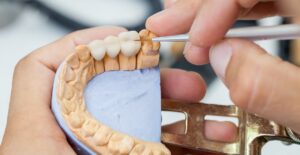
Next, impressions are taken. Traditional impressions use dental putty, while modern practices may use digital scanners for improved accuracy and comfort. If your crown is made in a dental lab, a temporary crown will be placed to protect the tooth until your permanent crown is ready.
Once the crown is ready, your dentist will check the fit, bite, and color before permanently cementing it in place.
After Getting a Dental Crown
After your appointment, mild sensitivity or soreness is normal, especially around the gumline. This typically fades within a few days. Over-the-counter pain relievers can help, and your dentist will provide care instructions.
It’s important to treat your crowned tooth like a natural one. Brush twice daily, floss regularly, and avoid biting hard objects like ice with your teeth. With proper care, dental crowns can last 10–15 years or longer.
If you notice ongoing pain, sensitivity when biting, or if the crown feels loose, contact your dentist right away. Early adjustments can prevent larger issues.
Why Dental Crowns Are a Trusted Solution
For many patients, dental crowns restore both function and confidence. They protect damaged teeth, improve appearance, and allow you to eat and smile comfortably again. Knowing what to expect at each step makes the process easier and helps you take an active role in your oral health.
If you’ve been told you need a crown, a consultation with a local Charlotte, NC dentist is the best way to get personalized guidance and peace of mind. At Warrier Family Dentistry in Ballantyne, we are here to help you with all your dental needs. Contact us today to get started!